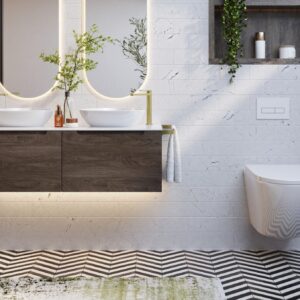
Exploring the Use of Wood in Bathrooms: A Sustainable Vision
Creating beautiful bathrooms while reducing their environmental impact is an exciting challenge. As we rethink bathroom design, we’re exploring innovative ways to make these spaces both aesthetically pleasing and sustainable. One idea we’re particularly passionate about is using wood as a key material in bathrooms, perhaps for walls and floor coverings instead of tiles; a concept that blends aesthetics, tradition, and sustainability.
The Challenge of Bathroom Environments
Bathrooms are notorious for their harsh conditions. Walls and floors in these spaces must endure fluctuating extremes of humidity and temperature, which for the wrong materials can quickly compromise their appearance and durability. For decades, tiles have been the go-to material for bathroom surfaces, and for good reason. Tiles are exceptionally robust and offer an almost limitless array of styles, patterns, and finishes, making them a superb medium for designing and finishing bathroom.
However, tiles come with a hidden environmental cost. The production process involves extracting and processing raw materials, firing them at high temperatures in energy-intensive kilns, and transporting them over long distances, all of which contribute significantly to their carbon footprint.
Why Wood Could Be a Great Choice
Wood presents a compelling alternative. As a completely renewable resource, it has a long history of performing admirably in wet and demanding conditions. From the shingles on roofs to the cladding on buildings, barrels for liquids, and even seaworthy boats, wood has more than proven its resilience. Advances in water-based, eco-friendly waterproofing treatments now make it more practical than ever to use wood in bathrooms, offering both durability and sustainability, as well as natural beauty.
Overcoming the Challenges of Wood in Bathrooms
While the idea of using wood in bathrooms is inspiring, we acknowledge the challenges. Corners and edges, where two walls meet or where surfaces connect, require special attention to ensure waterproofing and maintain visual appeal. Though there are proven techniques for achieving this, on the exteriors of buildings for example, we aim to refine them further, creating designs that are not only robust but suitable for smaller interior spaces, as well being visually stunning.
Our goal is to draw on centuries of expertise while pushing the boundaries of what’s possible with modern materials and techniques. We believe that with thoughtful design and innovative treatments, wood can rival traditional materials like tiles, offering a warm, natural aesthetic with a smaller environmental impact.
Join the Conversation
Sustainability is at the heart of our mission, and we’re committed to transparency in this journey. We want to hear your thoughts, ideas, and concerns about using wood in bathrooms. Are you excited about this concept? What appearances or materials appeal to you most? Do you have reservations about durability, maintenance, or other factors? Do you have technical expertise in the area and want to contribute?
Leave your comments and ideas below. Together, we can reimagine bathroom design and create spaces that are as kind to the planet as they are beautiful.